

Ensuring Safety in Fencing: Top 6 Rules Every Fencer Must Follow
Fencing is a very safe sport, and it is made safer still by good footwear and protective gear. But that safety depends on following the rules that guide every fencing activity. At Azza Sports we want fencing to be as safe as possible, which is why we share knowledge on our blog alongside building great shoes. Here are six crucial safety rules that, when ignored, can lead to serious injuries such as loss of eyesight, dangerous hits to the unprotected body and concussions.
Never hit someone who does not have their mask on

If someone does not have their mask on, never attempt to hit them. Even in full gear, a missing mask means they are not a target in that moment. Ask them to put their mask on before using them as a target.







Handle your blade with care when you are not fencing
Keep your point toward the ground when you are not fencing, or carry the blade with your hand wrapped around the point. Take care, because grazing the blade incorrectly can cause a metal splinter from residue on the blade.
Try your best not to hit an opponent's mask with your bellguard

This protects teammates and opponents from concussions. If your bellguard needs to be close to an opponent's head, consider forgoing that point, especially in practice. The best training partners are healthy training partners.
Always wear full gear during drills and bouting
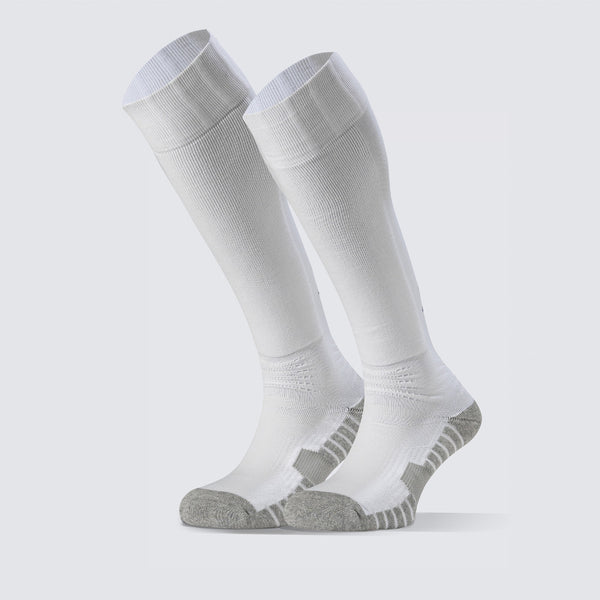
Wear your plastron, mask, white jacket under your electric jacket, and fencing socks, even when you think they might not be necessary. Safety equipment exists to minimise the impact of accidents, and it can protect your health when they happen. A good pair of fencing socks is a small but real part of that kit.
In a lesson, the student should wear at least a mask and glove

During a lesson it is generally acceptable for a student to wear only a mask and glove, as long as both student and coach follow the other precautions. The glove matters because it can prevent cuts and bruises to the hand. A glove and mask are the bare minimum.
When anyone calls halt, stop fencing
Fencing is a community, and that means looking out for one another. If another fencer, a referee or an onlooker tells you to halt, always stop. There may be a safety concern you cannot see, from an untied shoe to a jacket unzipping mid-bout. Halting protects you and everyone around you.
Follow these six rules and you protect yourself and your fellow fencers. To understand how your gear actively prevents injury, read how your equipment protects you from injuries, and for the most common injuries and how to avoid them, see our guide on common fencing injuries.
Arian Harwell
This is an excellent blog. As well as an informative and helpful blog about <a href= “https://www.harwelldesign.com/”>fencing.