

Best Fencing Shoes 2026: A Complete Buyer's Guide
Choosing the right fencing shoes does more for your footwork than almost any other piece of kit. The right pair grips the piste when you lunge, supports the ankle through fast direction changes, and absorbs the repeated shock of advancing and retreating for hours. The wrong pair slips, rolls, or leaves your knees and heels sore after a single session. This guide explains what actually matters in a fencing shoe in 2026, then gives focused advice for men, women and kids, plus what to look for if grip and movement are your priority.
What makes a good fencing shoe?
Fencing is a lateral, explosive sport played on a narrow strip. That places very specific demands on footwear that ordinary trainers and running shoes don't meet. Five things matter most.
Grip and a non-marking sole. You need traction for the lunge and instant braking on the recovery, without the sole catching mid-movement. A directional tread that grips forward and back but releases on lateral slides is ideal, and a non-marking rubber compound is required on most club and competition pistes.
Lateral support. More than half of fencing movement is sideways and rotational. A shoe with a reinforced midfoot and a structured heel keeps your foot stable when you change direction at speed, which protects the ankle and transfers power cleanly.
Targeted cushioning. Impact in fencing is concentrated at the heel on the recovery and the ball of the front foot on the lunge. Dual-density cushioning that reinforces those two zones, rather than a uniformly soft sole, protects your joints without making the shoe feel mushy or unresponsive.
Fit and breathability. A fencing shoe should be snug through the midfoot to stop the foot sliding inside the shoe, with a little room at the toes. Breathable uppers matter because bouts are long and feet get hot; a damp foot inside a loose shoe is how blisters and lost footwork start.
Durability where it counts. The trailing toe drags on every lunge, so a reinforced toe cap and abrasion-resistant outsole edge are what separate a shoe that lasts a season from one that lasts years.
If you want the full breakdown of fencing kit beyond footwear, see our fencing equipment guide.
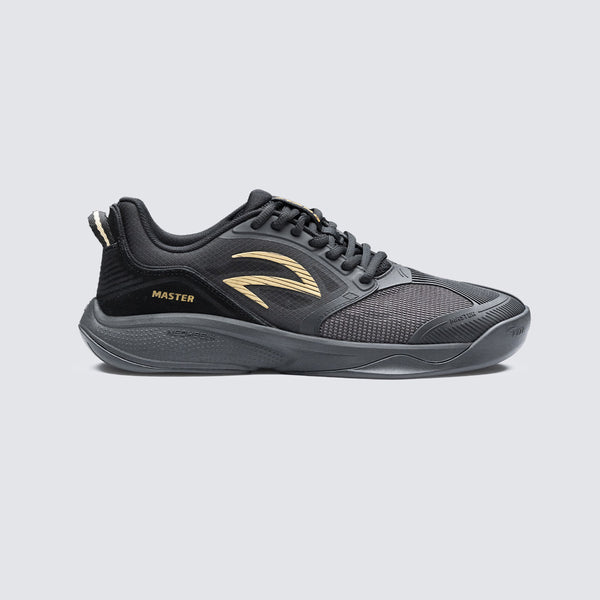
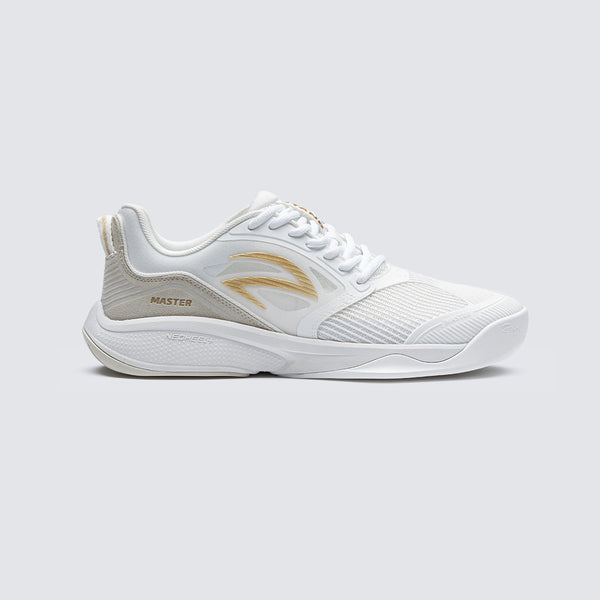
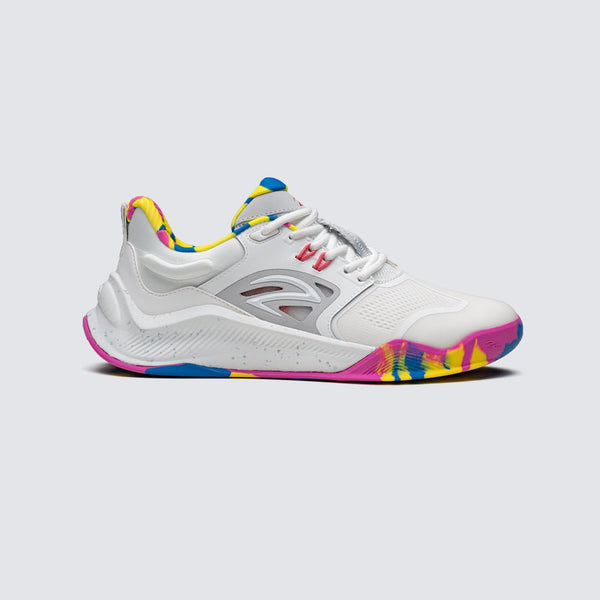
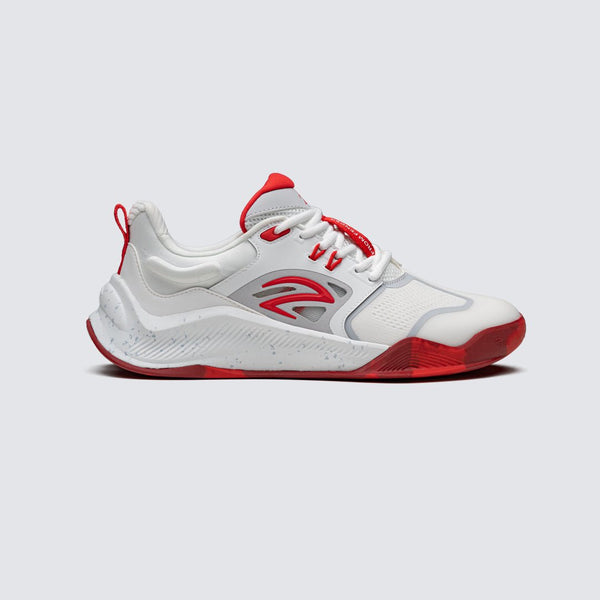
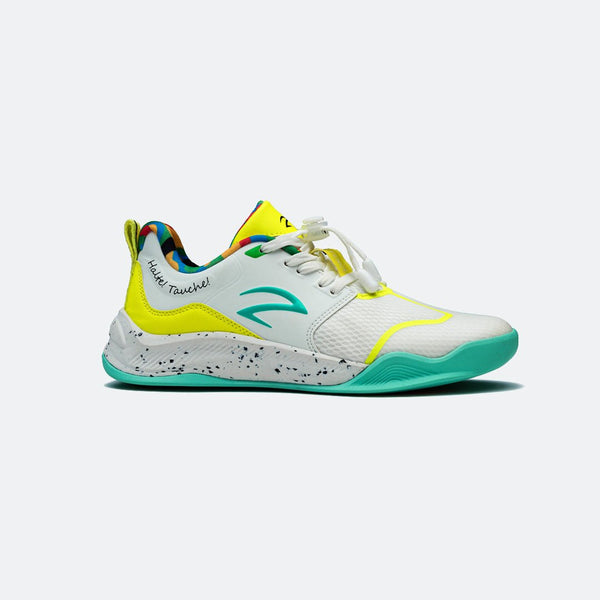
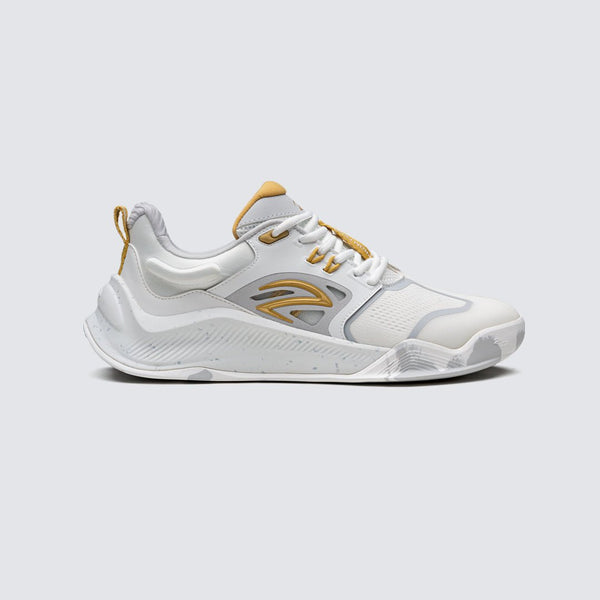
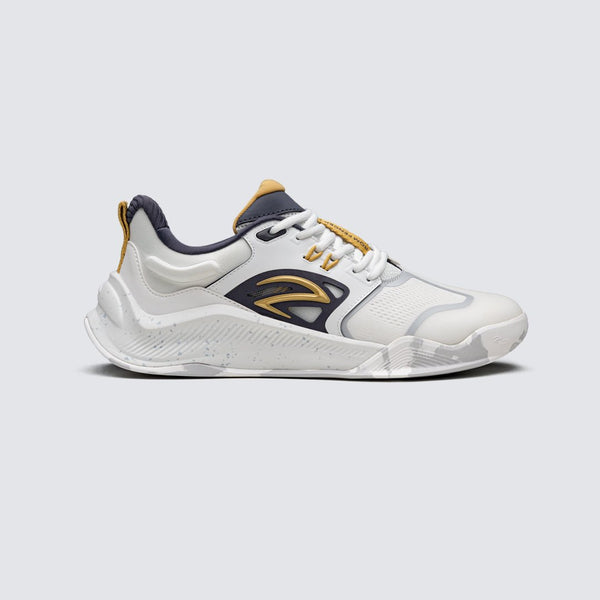
Best fencing shoes for men
Male fencers are typically looking for a stable, durable shoe that holds up to frequent training and competition. Prioritise lateral support and a reinforced toe over maximum cushioning, a shoe that's too soft costs you responsiveness on the lunge. Sizing for adults generally runs EU 36 to 48 depending on the model, so most men will find their fit within a standard range; if you're between sizes, size down for a snugger midfoot rather than up.
The Azza Sports 15/14 platform is built around exactly these priorities, a stable plate, directional grip outsole, reinforced heel wrap and a hard-wearing toe, and is designed and tested by Olympic fencers. Browse the full range on the men's fencing shoes collection, or see every adult model on the adults' fencing shoes collection.
Best fencing shoes for women
The biggest mistake women's fencers make is buying a men's shoe a few sizes down. A correctly fitted shoe matters more for women because a looser heel and wider toe box let the foot move inside the shoe, which costs grip and control on fast footwork. Look for a snug midfoot and a secure heel, and choose by your true EU size rather than converting from another system.
Azza Sports fencing shoes are unisex by design and offered across the full EU 36 to 47 range on the 15/14, so women aren't pushed into oversized men's sizing. The same stable plate, targeted cushioning and grip outsole apply. Browse the women's fencing shoes collection for the range, sized for a secure fit.
Best fencing shoes for kids
For young fencers, the priorities shift. Safety, easy on-and-off, and a grippy, supportive sole matter more than competition-grade stiffness. Children's feet grow fast, so many parents are tempted to buy big, but a shoe that's too large slides on the lunge and is a genuine trip and ankle risk. Buy to fit now, with no more than a thumb's width at the toe.
The Azza Sports Rookie is built specifically for young fencers (EU 33 to 38), with easy lacing, a grippy outsole and dual-density cushioning to protect growing joints from the first lesson. See it on the kids' fencing shoes collection.
Best fencing shoes for grip and movement
If grip is your single priority, judge a fencing shoe on four things, in this order: the outsole rubber compound, the tread direction, the height of the sole profile, and the stiffness of the midfoot. Cushioning matters, but it is not what makes you stick to the piste, and a shoe that is all cushioning and no structure will feel unstable exactly when you need precision.
This matters most to saber fencers and to anyone with a fast, mobile style, where you are constantly accelerating and braking inside a two metre window.
What to look for, in order of importance
| What to check | What you want | Why it matters on the piste |
|---|---|---|
| Outsole compound | Non-marking gum rubber, softer than a running outsole | Bites on the lunge and brakes on the recovery. Non-marking rubber is required on most club and competition pistes, so a hard outsole is often not even allowed. |
| Tread direction | Directional pattern, gripping forward and back, releasing laterally | You want traction along the strip and controlled release sideways. A tread that grips in every axis will catch mid-movement, which is how ankles get hurt. |
| Sole height | Low profile, flat plate | The closer your foot sits to the ground, the more you feel the piste and the less the shoe rolls under a hard direction change. |
| Midfoot stiffness | Reinforced, resists twisting by hand | A soft midfoot lets the shoe twist while your foot stays planted. That is lost power and a torsion risk. |
How to test grip before you buy
- Twist test. Hold the shoe at the heel and the toe and try to wring it like a cloth. Strong resistance is what you want.
- Press the outsole with your thumbnail. A grippy gum compound gives slightly. A hard, glassy sole will slide on a metallic piste.
- Look at the tread with the shoe upside down. You should see a clear front to back direction, not a uniform pattern.
- Do a lunge on a hard floor in store, and listen. A grippy shoe brakes quietly. A squeal on the recovery means you are sliding.
Where the Azza range sits
The Azza Sports 15/14 outsole is engineered for directional traction and quick lateral release, on a low, stable plate with a reinforced midfoot. The Master adds a carbon-fibre shank for torsional rigidity, an outsole tuned for start, stop and brake on metallic, wooden and synthetic floors, and a size range that runs to EU 48. Compare the full range on the adults' fencing shoes collection.
We are not going to tell you our grip is the best. What we can tell you is what it is engineered to do, and then let people with no reason to flatter us test it. The Fencing Coach tested the Master in August 2026 and published a detailed review, including what did not work for them. Read the review.
One thing most guides get wrong
Grip is not only the shoe. Piste surface changes everything. A metallic competition piste, a rubber club piste and a bare gym floor behave differently with the same outsole, and the shoe that feels perfect at your club can feel slick at a national event. If you compete on metallic pistes regularly, clean your outsoles before every bout. Dust and hall grit will cost you more traction than any difference between two good shoes. Our care guide covers how.
How much should you spend?
Quality fencing shoes generally sit between roughly 80 and 200 euros depending on whether they're built for beginners or competition. Spending at the entry level is fine when you're starting out; once you're training regularly, a competition-grade shoe with better support and durability pays for itself in fewer replacements and fewer niggling injuries. Azza Sports offers free worldwide shipping on orders over 200 euros (over 240 dollars in the USA).
Don't forget your socks
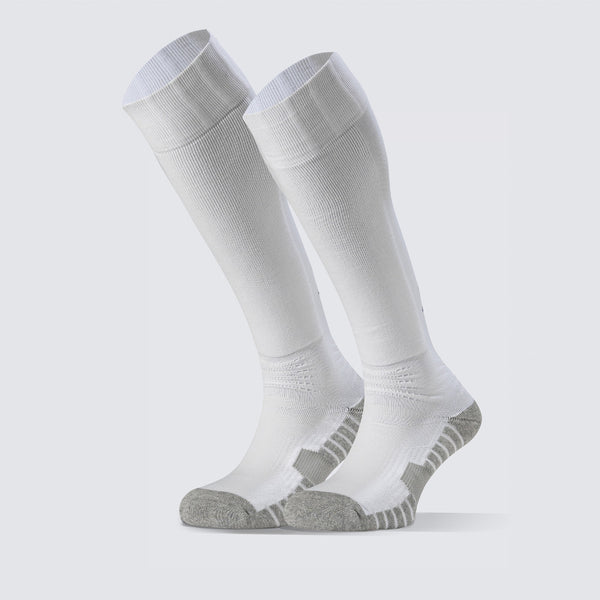
Fencing shoes only perform as well as what's inside them. Performance fencing socks with reinforced cushioning at the heel and ball of the foot, moisture-wicking fabric and a snug fit prevent bunching and blisters during long bouts. See the fencing socks collection. For full training kit, the activewear collection covers tops and bottoms built for the piste.
Frequently asked questions
What kind of shoes are best for fencing?
Shoes built specifically for fencing, with a non-marking grip outsole, strong lateral support, a reinforced toe for the trailing foot, and dual-density cushioning at the heel and forefoot. Running shoes are a poor substitute because they're built for forward motion, not the lateral, explosive movement of fencing.
Are fencing shoes unisex?
Many are, including the Azza Sports range, which is unisex across the full size run so both men and women fit their true size. The key for everyone is a snug midfoot and secure heel rather than a men's or women's label.
What size fencing shoes should I buy for my child?
Buy to fit now, not to grow into. A shoe more than about a thumb's width too long slides on the lunge and raises the risk of trips and rolled ankles. The Azza Sports Rookie is sized EU 33 to 38 for young fencers.
What's most important for grip and footwork?
The outsole, a non-marking rubber compound with a directional tread that grips on the lunge and releases on lateral slides, combined with a low, stable profile and a structured midfoot that resists twisting.
How long do fencing shoes last?
With regular training, a well-built pair with a reinforced toe and abrasion-resistant outsole edge can last several seasons. The trailing toe wears first, so a reinforced toe cap is the biggest factor in longevity. How long a pair lasts also depends heavily on how often and how hard you train, and on your surface.
How Azza shoes wear, and what is normal
Azza shoes are built for combat, not for the pavement. Fencing, like tennis, padel or squash, is one of the most demanding sports there is for footwear: every lunge and every recovery drives the foot hard into the floor. That intensity is exactly what our shoes are engineered for, and it also means they wear differently from everyday sneakers. Here's what's normal, why, and how to get the most out of your pair.
Where your shoes wear first, and why
Two areas take the most punishment:
- The toe: the very front drags along the floor on the trailing foot with every lunge.
- The inner forefoot: the pivot and push-off zone that scrapes the strip during explosive movements.
On your shoes, these are the areas marked TOE PROTECT and LUNGE PROTECTION. That's not decoration: they are reinforced, sacrificial zones, engineered to absorb this abrasion so the rest of the shoe stays intact.
This is by design
Think of these zones like the tread on a tyre, the string bed on a racket, or brake pads on a car: they are meant to wear, because they're doing their job. Every mark, scuff or worn patch there is the reinforcement taking the hit instead of the structure of the shoe. A worn toe or lunge zone after months of training isn't a shoe failing. It's a shoe protecting you exactly as intended.
Normal wear compared with a real defect
Some wear is expected. A genuine defect is something else, and we stand behind those. Here's how to tell them apart.
Expected wear, from use:
- Scuffing, abrasion or loss of the surface coating on the toe and inner-forefoot zones
- Gradual thinning of the protection zones over a season of training
- Cosmetic marks, scrapes and discolouration from the strip
Worth contacting us, possible defect:
- Sole or components separating without abrasion, in a low-stress area
- Stitching coming undone on its own
- Material cracking or crumbling on a pair that has seen little or no use
- Structural failure somewhere that isn't a normal contact or wear zone
If you're unsure, send us clear photos. We'll always take a proper look.
How to make them last longer
- Minimise unnecessary toe-dragging in warm-up and footwork drills.
- Let the shoes dry fully between sessions, and avoid direct heat.
- Clean the protection zones gently, with a soft brush, mild soap and warm water, rather than aggressive scrubbing.
- Rotate pairs if you train very frequently; it gives materials time to recover.
- Use them for their purpose: on-strip performance, not daily street wear.
A word on lifespan
How long a pair lasts depends heavily on how often and how hard you train, and on your surface. An intensive competitor drilling several times a week will naturally go through the protection zones far faster than an occasional fencer, sometimes within a single active season. That's not a shortcoming of the shoe; it's the price of a sport that asks everything from your footwear. We'd rather build a shoe that performs at that level and shows its battle scars than one that stays pristine because it was never really tested.
Built for the strip. Engineered to protect. Made to be used.