

5 Must‑Know Fencing Drills to Level Up Your Game
Looking for fencing drills for beginners that actually move the needle in 2026? Talent only takes you so far on the piste: consistent, targeted drill work is what builds the reflexes, footwork and point control that win bouts. The five must-know drills in this guide isolate the foundations every fencer needs: distance control, explosive lunges, blade rhythm, point accuracy and reaction speed. They are practical (most work solo), scalable (easy to make harder) and endorsed by coaches at every level. Pair them with a good pair of fencing shoes and long fencing socks, and you have a complete beginner training routine.
TL;DR: The 5 Must-Know Fencing Drills
- Advance and retreat repetition: controls distance and tempo
- Lunge with recovery: builds explosive power and balance
- Shadow fencing: refines bladework and rhythm solo
- Point control targets: sharpens accuracy and fine motor control
- Reaction + conditioning: partner cues plus jump rope intervals for reflexes and stamina
Ready for the next level? See our 7 advanced fencing drills for footwork and reaction time once these five are automatic.
Why targeted fencing drills matter (especially for beginners)
Fencing demands explosive movements and lightning-fast recoveries. Strengthening the legs and core improves push-off power and helps fencers execute lunges and recoveries with quick reactions. A stable lower body keeps the fencer balanced through lunges, parries and recoveries, and a focused drill block trains those qualities more efficiently than free bouting alone.
Shadow fencing and other technical drills reinforce proper rhythm and motion, giving fencers fine control over distance and timing. These elements come together on the piste: by drilling fundamentals outside bouts, you build the endurance, accuracy and tactical creativity that carry over when it counts. For a complete footwork curriculum, our ultimate guide to fencing footwork goes deeper than this article.
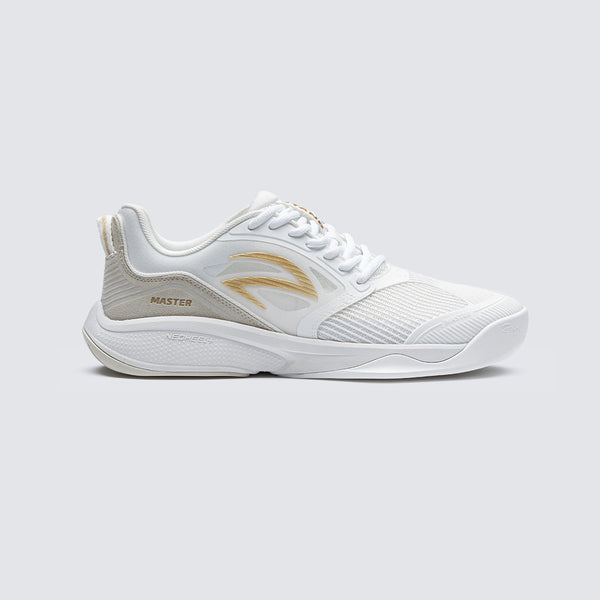
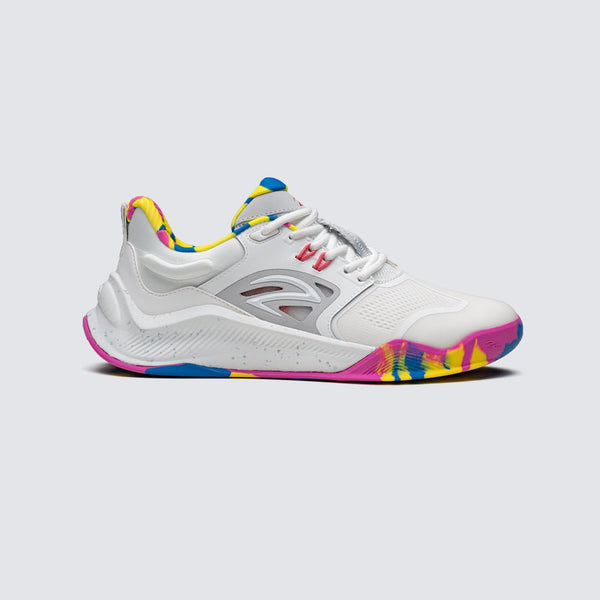
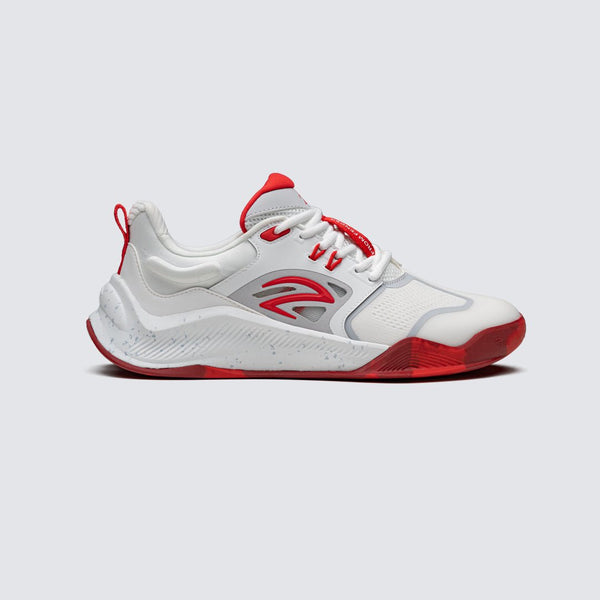
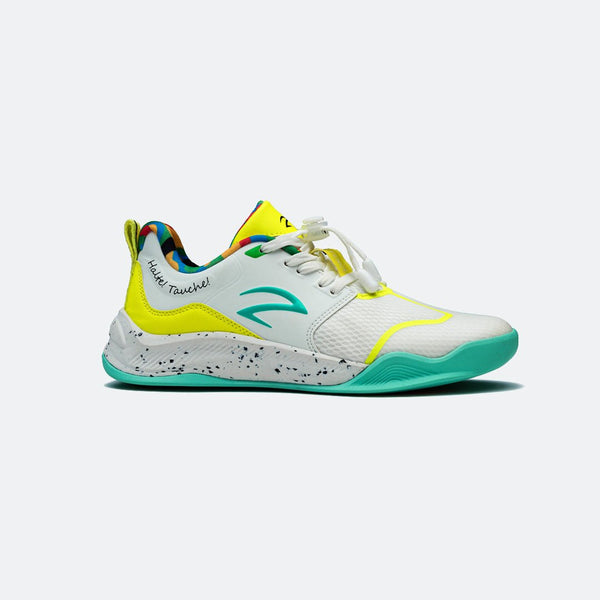
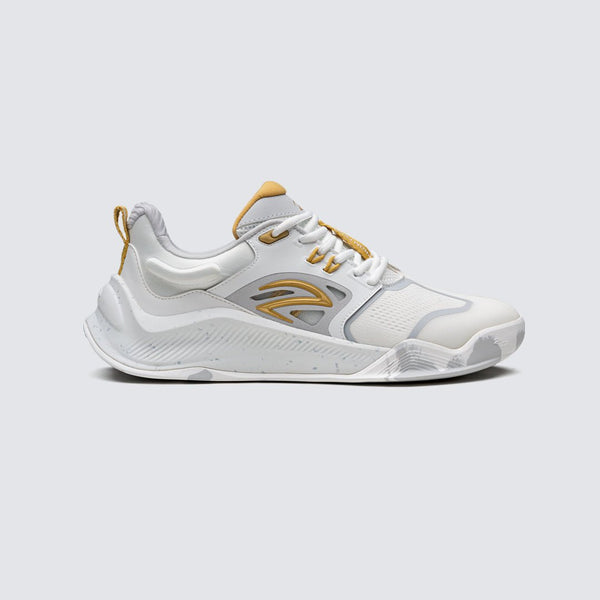
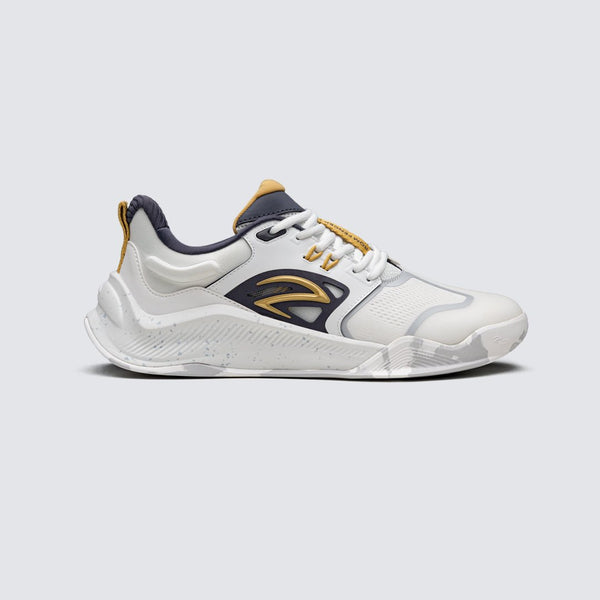
Start With the Right Foundation: Beginner drills compound knee and ankle stress fast. Specialised fencing shoes with lateral reinforcement save your joints over thousands of lunges.
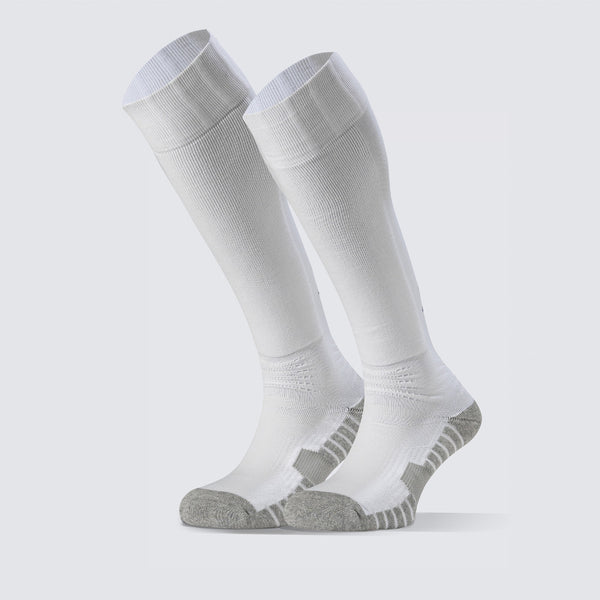
Shop Adults Fencing Shoes Shop Kids Fencing Shoes Explore Fencing Socks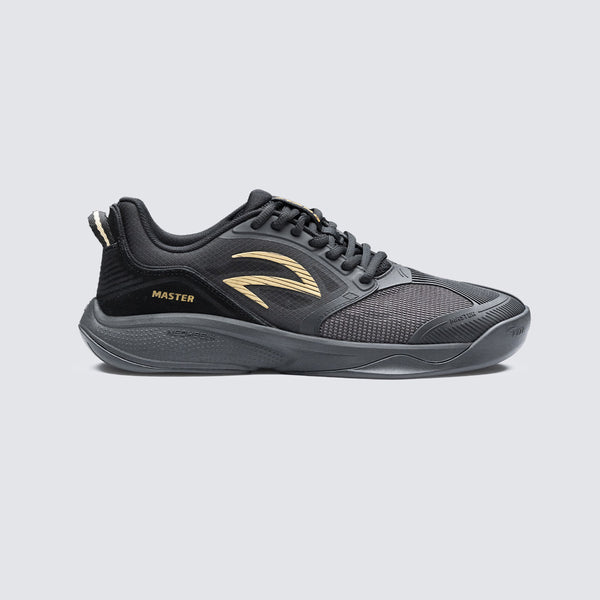
Drill 1: Advance and retreat repetition
This foundational footwork drill teaches you to control distance and maintain balance while moving up and down the piste. It is about more than marching: smooth, controlled steps set the rhythm for both attack and defence.
Execution: From the on-guard position, take a series of advances and retreats in rhythm along the length of the piste. Focus on keeping your weight centred over your hips and pushing off the back leg rather than hopping or bouncing. Repeat for multiple sets, gradually increasing speed without sacrificing control. Aim for 3 sets of 60–90 seconds.
Benefits: builds lower-body endurance, improves tempo control so you can set traps for your opponent, and reinforces balance, since a strong core keeps you stable during transitions. This drill is the cornerstone of every other piece of fencing footwork.
Drill 2: Lunge with recovery
The lunge is fencing's signature attack, and the recovery is just as important. This drill emphasises explosive power on the lunge and an immediate return to guard so you are never caught off-balance.
Execution: Begin in the on-guard stance. Extend your front foot and drive from the back leg into a lunge, fully extending the arm at the same moment. As soon as you reach full extension, snap your front foot back and return to the on-guard position. Vary the tempo: practise slow lunges to perfect form and fast lunges to build explosive speed. Target 3 sets of 10 reps.
Benefits: develops quick push-off power; strong legs and core translate to faster, more forceful attacks. It trains balance so you do not over-extend, and enhances power-to-speed efficiency, making your movements faster and more controlled.
Drill 3: Shadow fencing
Shadow fencing allows you to practise bladework and footwork without a partner, sharpening technique and rhythm. Because there is no opponent, you can focus on the details of each action and develop a smooth, controlled flow.
Execution: Imagine an opponent in front of you. Move through advances, retreats, lunges, feints and parries as if you were fencing a real bout. Vary your rhythms: sometimes slow and deliberate, sometimes fast and explosive, and visualise different scenarios: a passive opponent, an aggressive opponent, a counter-attacker. Three rounds of 2–3 minutes each is a sustainable dose.
Benefits: improves technical motion control; repeating tiny movements gives fencers precise control over the blade. It sharpens rhythm and timing (matching or disrupting an opponent's cadence), provides aerobic conditioning, enhances balance and recovery, and strengthens visualisation, a key mental-game skill.
Drill 4: Point control targets
Accuracy is critical, especially for foil and epee fencers who must hit small target areas. Drilling point control on stationary targets builds precision and fine motor control in the fingers and wrist.
Execution: Affix a small marker (tape, a sticker or a paper dot) to a wall or target dummy at shoulder height. From the on-guard position, extend your arm and touch the marker with the tip of your weapon. Draw back and repeat, gradually increasing speed while maintaining accuracy. Aim for consistent grouping of touches; 5 sets of 20 reps is a good baseline.
Benefits: refines aim and point control; hitting small targets repeatedly trains precise blade work. Builds muscle memory in the fingers and wrist for clean, direct attacks. Serves as a low-equipment drill you can perform almost anywhere to maintain sharpness between lessons.
Drill 5: Reaction and conditioning
Quick reflexes and stamina often decide matches. Pair a partner-reaction drill with jump rope intervals to train both your neural response and cardiovascular system in the same session.
Partner reaction drill
Execution: Stand on guard while a training partner or coach calls out random actions such as "lunge!", "parry!" or "advance!". Respond instantly, executing the called movement with proper form. Run three-minute rounds, mixing offensive and defensive commands. To increase difficulty, add visual cues: coloured cards instead of verbal calls.
Benefits: trains neural pathways to respond faster; vision training has been shown to reduce reaction times in athletes by more than 10 %, improving eye–hand coordination. Builds confidence under pressure by simulating the unpredictability of a bout.
Jump rope intervals
Execution: Use a skipping rope to mimic the quick bursts and footwork patterns of fencing. Jump for 30 seconds, rest for 15 seconds, and repeat for 10 rounds. As you improve, incorporate side steps and change tempo to mirror fencing movements.
Benefits: develops cardiovascular endurance and lower-limb coordination; jump rope training has been shown to improve motor coordination and balance by 9 % in youth athletes. Reinforces rhythm and agility, translating directly into smoother advances and retreats on the piste, and gives you a portable conditioning tool for days you cannot get to the club.
A 25-minute beginner fencing drill routine
Put the five drills together in a sustainable weekly routine:
- Warm-up: 3–5 minutes hip swings, ankle circles, light walking lunges
- Advance-retreat (drill 1): 3 × 60 seconds
- Lunge + recovery (drill 2): 3 × 10 reps
- Shadow fencing (drill 3): 2 × 2 minutes
- Point targets (drill 4): 3 × 20 touches
- Reaction OR jump rope (drill 5): 3-minute round / 5 jump-rope intervals (alternate by day)
- Cool down: 2–3 minutes of stretching
Run this on non-consecutive days (Mon–Wed–Sat works well) to allow recovery while still reinforcing movement patterns. Pair with deliberate practice habits from our guide on how to improve fencing skills.
Train Cooler, Move Lighter: Five-drill sessions get sweaty fast. Breathable Azza training apparel keeps you dry and unrestricted from the first lunge to the last sprint.
Explore Active Wear Shop Fencing SocksFrequently asked questions about beginner fencing drills
What drills should beginners start with?
Beginners should start with the three foundational drills above: advance-retreat repetition (drill 1), lunge with recovery (drill 2) and shadow fencing (drill 3). These build the stance, footwork rhythm and recovery habits that everything else stacks on top of. Add point control (drill 4) once your stance is automatic, and reaction/conditioning (drill 5) once you are fencing weekly.
How do you drill alone at home?
Four of the five drills above (advance-retreat, lunge + recovery, shadow fencing, point control targets) work perfectly solo at home with minimal kit. Reaction work can be adapted using a bouncing tennis ball or a free random-cue smartphone app. Jump rope intervals are fully solo. The only thing you need a partner for is live blade work and bout-condition tactical drills.
5 vs 7 drills: which routine is better?
The 5-drill set in this article is the right starting point for beginners and intermediate fencers: it covers all four key skill areas (distance, power, accuracy, reaction) in 25 minutes. Once those feel automatic, level up to our 7 advanced fencing drills, which add lateral movement, tempo-change work and recovery sprints to push reaction time and bout endurance further.
How often should beginners drill?
Two 25-minute sessions per week is plenty for the first month. After four to six weeks, scale up to three sessions per week on non-consecutive days. Pushing beyond three structured drill sessions per week (on top of club bouting) usually leads to form breakdown and reinforces bad habits rather than good ones.
Do I need special shoes for fencing drills?
For one or two sessions a week, court shoes work as a starter. As you ramp up drill volume, especially repeat-lunge work, dedicated fencing shoes with lateral reinforcement and heel cushioning become genuinely important to protect knees and ankles. Pair them with long fencing socks for grip and friction control inside the knickers.
How long should a beginner drill session last?
20–25 minutes of focused drill work is the sweet spot for beginners. Past 30 minutes, technique degrades from fatigue and you start grooving bad form. If you want more volume on a given day, split the work across morning and evening rather than one long session.
Where to go next
- Next step up: Our 7 advanced fencing drills add lateral shuffles, tempo-change work and recovery sprints.
- Deeper movement theory: The ultimate guide to fencing footwork breaks down every movement pattern.
- Practice habits: Get more from every session with how to improve fencing skills.
- Gear: Browse Azza's fencing shoes and long fencing socks, the closest equipment to your footwork. For weapons, masks and electric gear, source from a specialist fencing armoury or your club's preferred supplier.
By dedicating two or three 25-minute sessions a week to these five must-know fencing drills, you build a resilient foundation of footwork, power, accuracy and reflexes that pays off bout after bout in 2026. The drills work for foil, epee and sabre alike: they are the universal grammar of the sport. Keep drilling, keep pushing, and let the gear you trust stay right behind your progress.